Wildfire Smoke Is Back: What Actually Cleans Your Indoor Air
PM2.5 from wildfire smoke gets indoors and stays there. What the EPA and clinical trials say works — sealing the room, HEPA filtration, and what to skip.
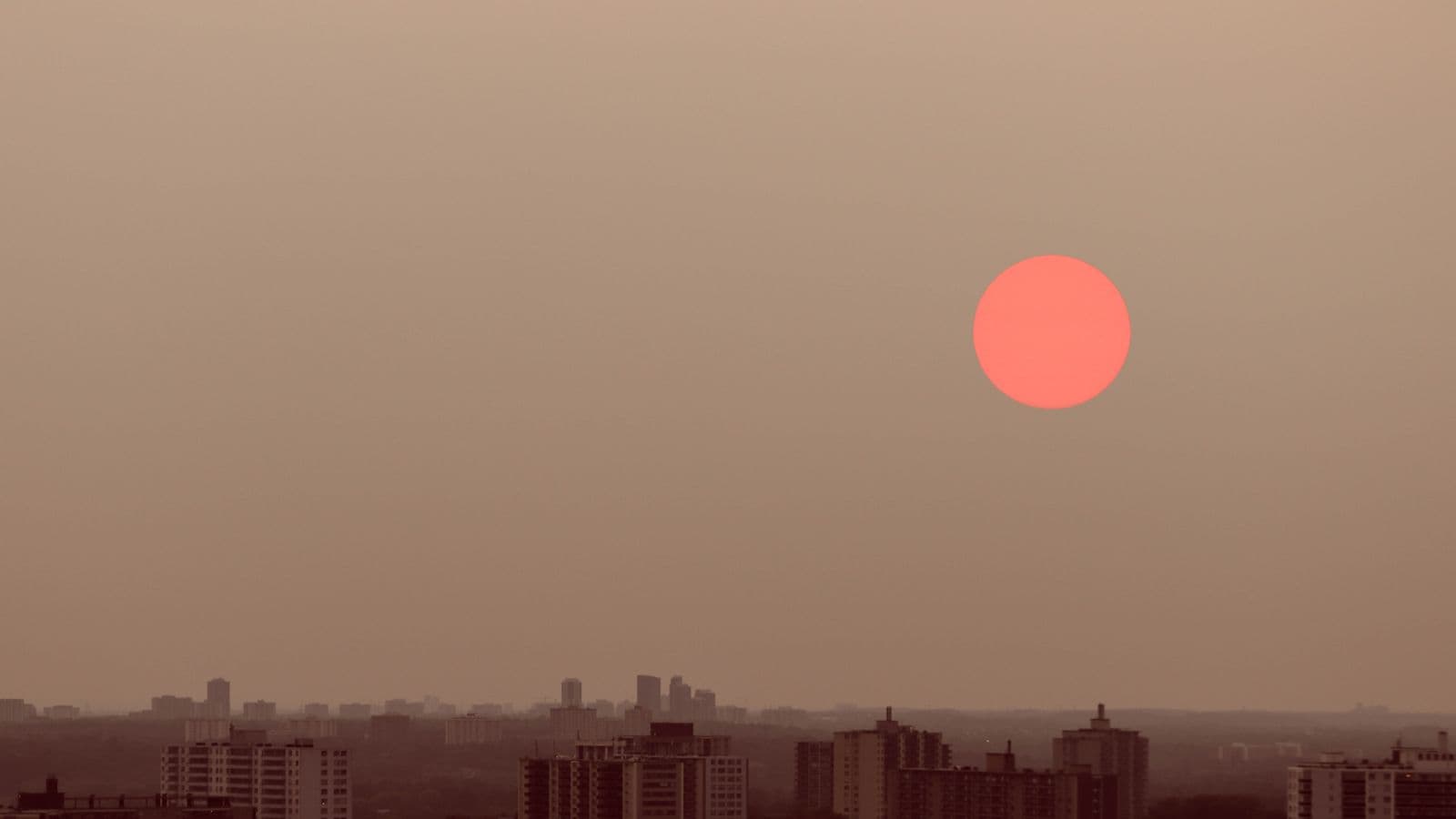
Wildfire smoke is not ordinary haze. The health concern is PM2.5 — particles smaller than 2.5 micrometers, small enough to travel deep into the lungs and cross into the bloodstream. On a bad smoke day these particles drive the Air Quality Index into its red and purple bands, and the reason "stay indoors" is standard advice is that indoors is where most people can actually control their exposure. The catch, as the EPA is blunt about, is that smoke's fine particles don't stay outside — they seep in through gaps, vents, and every door opening, and indoor levels climb toward outdoor levels unless something is done.
So the practical question isn't whether to shelter indoors. It's how to make the indoor air genuinely cleaner than the air outside.
First, know your number
The Air Quality Index is the tool for that. AirNow maps PM2.5 concentrations onto six color-coded categories, each with concrete guidance — green and yellow are routine, orange starts affecting sensitive groups, and red, purple, and maroon are progressively hazardous for everyone. Checking the local AQI (via the AirNow site or app) before deciding whether to open windows, run errands, or seal up is the cheapest, fastest move available, and it costs nothing.
The free tier: seal and stop adding smoke
Before buying anything, two things reduce indoor PM2.5:
- Seal the envelope during smoke events. Close windows and doors; if the home has a forced-air HVAC system, run it with a high-efficiency filter and close the fresh-air intake. Weatherstripping gaps matters more than it sounds.
- Stop adding particles indoors. The EPA's guidance is specific here: avoid anything that burns or aerosolizes during a smoke event — candles, gas stoves, frying, incense, and vacuuming (which re-suspends settled dust). Every one of those adds to the PM2.5 the smoke is already contributing.
A well-sealed room with no indoor sources is the baseline. Filtration is what pushes indoor air below outdoor levels.
What filtration evidence actually shows
This is where the research gets concrete. In a randomized crossover trial in a woodsmoke-affected community, one week of HEPA air filtration cut indoor PM2.5 by about 60% and measurably improved a marker of blood-vessel function in otherwise healthy adults. That's a real, measured indoor-air intervention producing a real physiological signal — not a marketing claim.
The EPA's own guidance lines up: a portable air cleaner with a true HEPA filter removes fine particles effectively, as long as it's sized to the room. The number to match is the Clean Air Delivery Rate (CADR) against the room's square footage — an undersized unit in a large room won't keep up. Two cautions from the same guidance are worth repeating:
- Skip ozone generators and "ionizers." No federal agency has approved intentional ozone generation for occupied spaces; ozone is itself a respiratory irritant. Mechanical HEPA filtration is the evidence-backed path.
- A DIY box-fan filter works in a pinch. Taping a high-MERV furnace filter to a box fan is a recognized low-cost stopgap for a single room. It's less durable and less efficient than a purpose-built unit, but during an acute smoke event it beats nothing.
Choosing a purifier
For a device you'll run for years — not just this smoke season — a purpose-built HEPA purifier sized to the room is the durable version of what the trial tested.
The evidence for HEPA filtration reducing indoor particulate matter is strong and consistent — it's one of the better-supported interventions on this site. Direct symptom relief for allergies or asthma is more mixed in the trials, but for the specific job of cutting wildfire-smoke PM2.5 in a room, the mechanism and the measurements agree.
The bottom line
Wildfire smoke's danger is fine particles, and indoors is where you can win against them — but only if you act on the air rather than assume four walls are enough. Check the AQI, seal the room and stop adding smoke indoors, then run a correctly-sized HEPA filter. That sequence, backed by EPA guidance and a controlled trial, does more than any single purchase does on its own.
This article is informational and not medical advice. If smoke is triggering breathing problems, chest pain, or symptoms in someone with heart or lung disease, seek medical care.
Sources
4 citedMedical disclaimer. The information on this site is provided for educational purposes only and is not intended as medical advice. It does not constitute a diagnosis, treatment plan, or recommendation for any specific health condition. Always consult a qualified healthcare professional before making changes to your supplement regimen, diet, or lifestyle — especially if you are pregnant, nursing, taking medications, or managing a medical condition.
Affiliate disclosure. Some links on this site are affiliate links. If you purchase through them, we may earn a small commission at no extra cost to you. This never influences our editorial assessments — products are graded solely on the evidence.